Keyboard
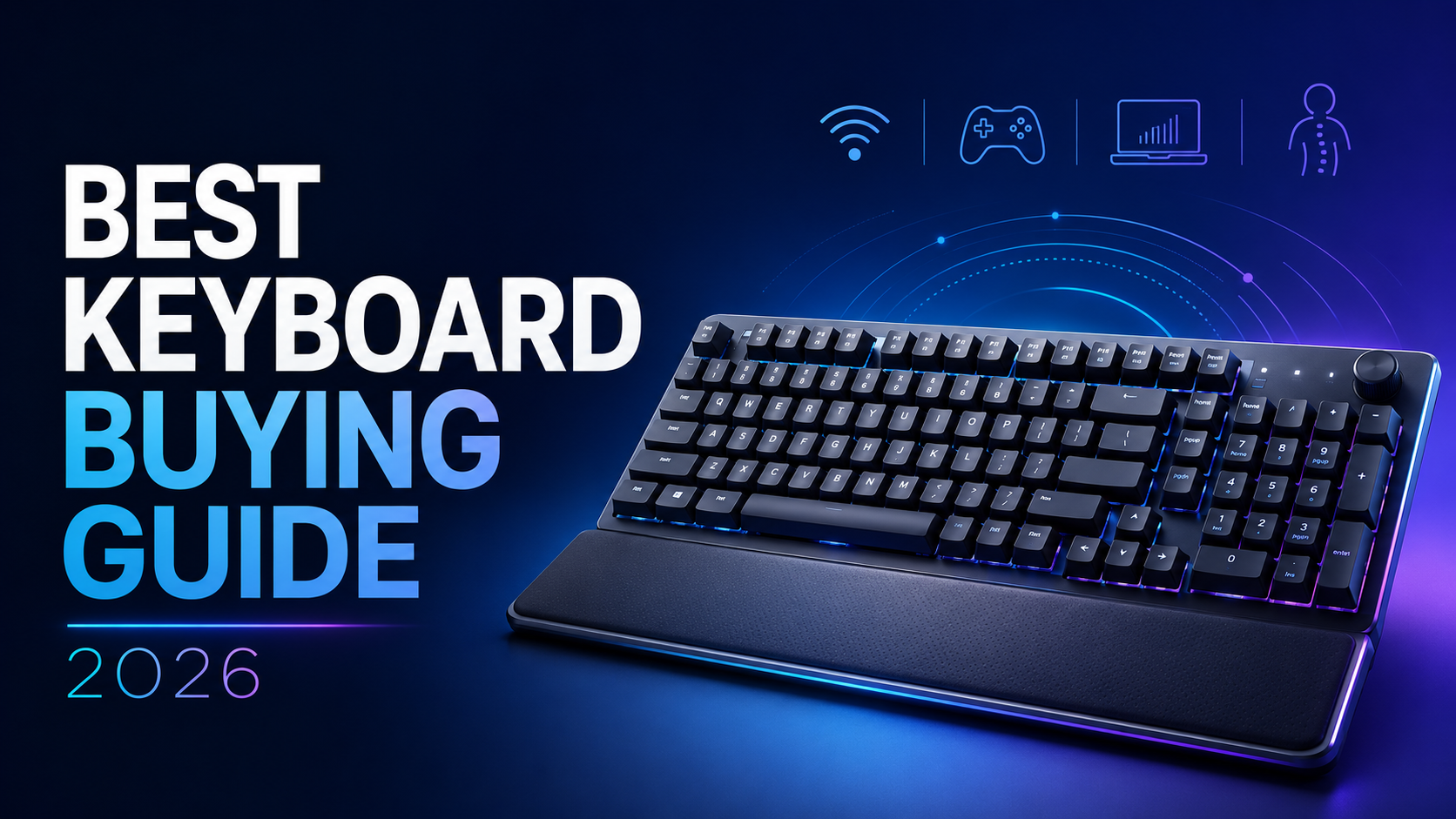
Best Keyboard Buying Guide 2026: Mechanical, Wireless & More
Confused about which Keyboard to Buy? This complete 2026 Keyboard Buying Guide explains Layouts, Switch Types, Connectivity, Ergonomics and pricing to help you choose the Right Keyboard for Work, Gaming or Everyday Use.
Best Keyboard Buying Guide 2026
A Keyboard is one of those devices we often buy without much thought—until an uncomfortable Layout, Unreliable Wireless Connection or Noisy switch starts Bothering us Every Day.
The right Keyboard can make long Work sessions more Comfortable, Improve Gaming responsiveness and reduce the small frustrations that come with typing for hours. The Expensive option is not Automatically the best one. What matters is choosing a Keyboard that fits your Work, your Desk, your Devices and the way you like keys to feel.
This Guide explains the Important differences without burying you in technical language.
[Find My Keyboard]Not sure which Model fits your needs? Try the MiniDevices Recommendation tool and enter your Budget, Preferred Layout and main use. It will compare suitable Keyboards already available in our Catalogue.
Quick answer: Which Keyboard should you Buy?
| Your Main Need | A Good Starting Point |
|---|---|
| Everyday Home or Office use | Full-Size or Compact Wireless membrane Keyboard |
| Heavy Typing and Writing | Tactile Mechanical or Low-Profile Keyboard |
| Quiet shared Workspace | Scissor-Switch, Silent Membrane or Quiet Mechanical Keyboard |
| Competitive Gaming | Wired or Low-Latency 2.4 GHz Mechanical Keyboard |
| More Mouse Space | Ten Keyless, 75% or 65% Keyboard |
| Regular Spreadsheet and Number Entry | Full-Size Keyboard with Number Pad |
| Multiple Computers or Tablets | Multi-Device Bluetooth Keyboard |
| Wrist or Shoulder Discomfort | Split or Ergonomically shaped Keyboard |
| Custom Feel and Easier Repair | Hot-Swappable Mechanical Keyboard |
This Table is only a Starting Point. The Sections below will help you Narrow the choice Properly.
1. Start with How you will Use the Keyboard
Before comparing Brands or Switch Colours, decide what you expect the Keyboard to do most of the Time.
For Office Work
Look for Comfortable key Spacing, Reliable Connectivity and a layout that supports your daily Applications. If your work involves Excel, Financial Data or Frequent Number Entry, a dedicated Number Pad is usually worth keeping. Multi-Device switching is helpful if you move between a Work Laptop, Personal Computer and Tablet.
For Writing and Programming
Key Feel matters more when you type for several Hours a day. Many Writers and Developers prefer Tactile Mechanical switches because the Bump helps confirm each Keypress. Others prefer Low-Profile Scissor Switches because they require less finger movement and feel closer to a Laptop Keyboard.
There is no Universally “Best” switch for Typing. Comfort depends on your Preference, Typing Style and Tolerance for Noise.
For Gaming
Prioritise consistent key Response, Anti-Ghosting, N-Key Rollover and a Dependable Connection. A Wired connection is Simple and Reliable, while a good 2.4 GHz Wireless Connection can provide the freedom of wireless without relying on ordinary Bluetooth for Latency-Sensitive Play.
Hall effect Keyboards have become more visible in Gaming because compatible Magnetic Switches can support adjustable Actuation and Rapid-Trigger features. These can be useful for Competitive Players, but they are not essential for casual Gaming or Office use. Keychron’s current Hall Effect models, for example, Advertise adjustable Actuation and rapid Trigger as Gaming-Focused features.
[Best Gaming Keyboards in 2026]For Travel and Hybrid Work
Choose a Compact, Lightweight Keyboard with Bluetooth, Good Battery Life and Compatibility with the devices you carry. Check whether the Layout still includes the Navigation Keys and Shortcuts you use Regularly.
2. Mechanical vs. Membrane vs. Scissor-Switch Keyboards
The Switch Mechanism has a major effect on typing Feel, Sound, Thickness and Price.
Membrane Keyboards
Membrane keyboards use a Flexible Pressure layer beneath the Keys. They are commonly Affordable, Quiet and Resistant to small amounts of Dust and Debris.
They are a sensible choice for general Office Work and Families that want a simple Keyboard. Their Disadvantages are a softer or less defined key feel and Limited Repairability on many Models.
Mechanical keyboards
Mechanical Keyboards normally use an Individual switch beneath each Key. They can provide a more consistent Feel, greater Customisation and easier Replacement of Keycaps or Switches on Compatible Models.
The three common Switch-Feel Categories are:
- Linear: Smooth movement without a Tactile Bump. Popular for Gaming and users who prefer a Light, Uninterrupted Press.
- Tactile: A noticeable bump during the Press. Often preferred for Typing because it provides Physical Feedback.
- Clicky: A Tactile Bump with an Audible Click. Satisfying for some Users, distracting in Shared Spaces.
Logitech’s current Mechanical range similarly distinguishes Tactile, Linear and Clicky options. Switch Names and Colours are not completely standard across every Manufacturer, so always check the actual Description rather than relying only on Colour.
Scissor-Switch Keyboards
Scissor switches are common in Laptops and slim Desktop Keyboards. They offer short Key Travel, a Low Profile and relatively Quiet Operation. They work well for people who enjoy Laptop-Style typing but want a separate Keyboard and a more Flexible Desk setup.
Hall Effect and Optical Keyboards
Hall Effect Keyboards use Magnetic sensing rather than a traditional Metal contact in each Compatible Switch. Some allow the User to change the Actuation Point or enable Rapid-Trigger behaviour through Software.
Optical Keyboards use Light-Based sensing for Actuation. Both Technologies can offer Fast, Consistent Input, but Software Quality, Switch Feel and overall construction still matter more than the Technology Label alone.
For most Buyers, a Well-Made Mechanical, Membrane or Scissor-Switch Keyboard remains enough. Pay extra for Hall Effect or Optical features only when you know how they support your use.
[Mechanical vs. Membrane Keyboard: Which Is Better?]3. Choose the right Keyboard size
Keyboard size affects Desk Space, Portability and the Keys you can access directly.
| Layout | What it Normally Includes | Best Suited To |
|---|---|---|
| Full-Size / 100% | Function Row, Arrows, Navigation Cluster and Number Pad | Office Work, Data Entry and Spreadsheets |
| 96% / 1800 Compact | Most Full-Size Keys in a tighter Arrangement | Users wanting a Number Pad with less Width |
| Tenkeyless / TKL | Full main Layout without number Pad | Gaming, Writing and General Productivity |
| 75% | Function Row and Arrows in a Compact Body | Balanced Work and Portable Setups |
| 65% | Main Keys, Arrows and some Navigation Keys | Small Desks and Travel |
| 60% | Main Typing Block; Many Commands use Layers | Minimal Setups and Experienced Compact-Keyboard Users |
A smaller Keyboard gives your Mouse more Room and can help keep your Hands closer together. However, Compact Layouts move some Functions to Shortcuts or Layers. If you frequently use Home, End, Page Up, Function Keys or a Number Pad, make sure those Keys remain easy to access.
[Keyboard Sizes Explained: Full-Size, TKL, 75%, 65% and 60%]4. Wired, Bluetooth or 2.4 GHz Wireless?
Wired
A wired USB Keyboard does not need Charging and avoids Wireless pairing issues. It is a dependable choice for a permanent Desk, Shared Computer or Gaming Setup.
Bluetooth
Bluetooth is convenient for Laptops, Tablets and Phones because it does not occupy a USB port. It is especially useful on Keyboards that can remember several Devices and Switch between them.
Bluetooth Keyboards operate as human Interface Devices through standard Bluetooth Profiles, helping them work across many Compatible Systems. Real-World reliability still varies with the Keyboard, Host Device, Interference and Power-Saving behaviour.
2.4 GHz wireless
This connection normally uses a small USB receiver. It is often the preferred Wireless option for Gaming and busy DeskTop setups because Manufacturers can optimise the Keyboard and receiver as a Pair.
Tri-Mode Keyboards
Some Keyboards include Wired USB, Bluetooth and 2.4 GHz modes. They offer excellent Flexibility, but confirm that all modes are supported on your preferred Operating System and that the receiver is easy to Replace or Store.
5. Check Compatibility before Buying
Most Keyboards can perform basic typing across Windows, macOS, ChromeOS, Android and iPadOS, but Legends and Shortcut behaviour can differ.
Check:
- Whether the Keyboard has Windows, MacOS or Dual-Labelled Keys
- Whether System shortcuts work on your Operating System
- Whether Configuration Software supports your Computer
- Whether Remapping is stored on the Keyboard or requires Software to remain Open
- Whether Bluetooth Pairing supports all the Devices you plan to Use
- Whether the Supplied receiver requires USB-A or USB-C
Mac users should pay particular attention to Command and Option key placement. Tablet users should check both Operating-System support and the Physical Stand or Case Arrangement.
6. Features that are Genuinely Useful
Multi-Device Switching
One button can move the Keyboard between Two or Three Paired Devices. This is Valuable for Hybrid Work and shared Desks.
Backlighting
White Backlighting improves key Visibility in Dim Rooms. RGB lighting offers more Customisation but should not be treated as a Substitute for Switch Quality, Stabilisers or Software Reliability.
Hot-Swappable Switches
A Hot-Swappable mechanical Keyboard lets you replace Compatible Switches without Soldering. It is useful for Customisation and Repairs. Check the Socket Type and Switch Compatibility before Buying.
Programmable Keys and Remapping
Shortcuts, Macros and Remapping can save time in Editing, Design, Programming and repetitive Office Tasks. Browser-Based tools, QMK/VIA support or good Manufacturer Software can add real value—but only if they support your Operating System.
Wrist Rest and Adjustable Angle
A Detachable Wrist rest may improve Comfort, but it should support the Palms rather than force the Wrists Upward. More Keyboard Tilt is not always more Ergonomic. Your Wrists should remain reasonably Neutral while Typing.
Dedicated Media Controls
A Volume Wheel, Mute Key and Playback controls are small Conveniences that become surprisingly useful during Calls and Everyday Work.
7. Do you need an Ergonomic Keyboard?
An Ergonomic Keyboard can help some users achieve a more neutral Hand and Shoulder position. Common designs include curved key Layouts, Split Keyboards, Tented Sections and separate Number Pads.
They require an Adjustment Period and are not a Guaranteed Solution for pain. If you already Experience persistent Discomfort, seek Qualified Medical or Ergonomic advice rather than relying on a new Keyboard alone.
For a more Comfortable Setup:
- Keep the Keyboard near enough that your Elbows remain Relaxed
- Centre the Main typing area—not necessarily the full Keyboard—against your Body
- Avoid resting your Wrists on a Hard Desk edge while Typing
- Keep Frequently used Keys and the Mouse within easy Reach
- Take Regular movement Breaks
8. Keycaps, build Quality and Sound
Keyboard Quality is more than the Switch Name.
Keycaps
ABS Keycaps are common and can feel smooth over time. PBT keycaps are often more resistant to shine and may have a slightly textured feel. The Moulding and Legend method also affect Durability.
Replacement Keycaps are not universally Compatible. Stem Type, Key Size, Stabiliser Design, Layout and Keycap profile all matter.
Case and Plate
Plastic cases can be light and Perfectly Durable. Metal Cases feel more substantial but increase Weight and Price. In Mechanical Keyboards, the Plate, Internal Foam, Mounting Style and Stabilisers all influence Sound and Feel.
Stabilised Keys
Space, Enter, Backspace and Shift keys use stabilisers on many Keyboards. Poor stabilisers may rattle even when the Switches themselves are good. If possible, listen to a typing sample and read feedback about the Larger Keys.
9. How much should you Spend?
Prices change Frequently, but these broad Indian-Market bands can help frame the decision:
| Approximate Budget | What to Expect |
|---|---|
| Under ₹1,500 | Basic Wired or Wireless Membrane Keyboards |
| ₹1,500–₹4,000 | Better Wireless Models, Compact Layouts and entry Mechanical Options |
| ₹4,000–₹8,000 | Stronger Mechanical choices, better Keycaps, Multi-Device features and improved Construction |
| ₹8,000–₹15,000 | Premium Productivity Keyboards, Customisable Mechanical models and advanced Gaming Features |
| Above ₹15,000 | High-End custom Construction, Premium Wireless Systems, Ergonomic Designs or Specialist Gaming Technology |
Do not spend extra only for RGB lighting or a fashionable Layout. Put Comfort, Reliability, Switch preference and useful features first.
10. Common Keyboard-Buying Mistakes
Choosing by switch Colour alone
Switch Colours are useful shorthand within a Brand, but they are not fully consistent across Manufacturers. Read the Force, Feel and Sound Description.
Buying a Small Layout without checking missing Keys
A 60% Keyboard looks clean, but it may slow you down if you constantly use Arrows, Function Keys or Navigation Controls.
Ignoring noise
Clicky Switches can be distracting during Calls, Late-Night use or Work in a shared Room. Even non-clicky Mechanical Keyboards vary significantly in Sound.
Assuming every Wireless Keyboard is the Same
Bluetooth, Proprietary receivers and 2.4 GHz connections serve different needs. Check Latency, Device Switching, receiver Type and Battery behaviour.
Paying for Gaming features you will not use
Adjustable Actuation, Ultra-High polling Rates and Rapid Trigger can be useful for competitive Gaming, but they will not automatically improve ordinary Work or Casual Play.
Forgetting Software Compatibility
A Keyboard may type correctly on your Computer while its Remapping, Lighting or Macro Software remains Unavailable.
[Keyboard Buying Mistakes to Avoid in 2026]Our Simple Recommendation
For most Office Users, a comfortable Full-Size or compact Wireless Keyboard with dependable Multi-Device switching is the Practical Choice.
For people who type Heavily, a Tactile Mechanical Keyboard or a good Low-Profile Keyboard is worth considering. If you share a Room or take frequent Calls, choose Quiet Switches.
For Gaming, prioritise a reliable Connection, Consistent Switches and the correct Layout before paying for Lighting or extreme Polling-Rate claims. Competitive Players can then consider Hall Effect features such as adjustable Actuation.
The best Keyboard is the one that feels natural after several hours—not the one with the longest specification list.
[Get a Keyboard Recommendation]Ready to Narrow the Options? Use the MiniDevices AI Recommendation tool to find Keyboards that fit your Budget, Typing preference and Device setup.
Frequently asked Questions
Is a Mechanical Keyboard better than a Membrane Keyboard?
Not for Everyone. Mechanical Keyboards usually provide more distinct key Feel and Customisation, while Membrane Keyboards are often Quieter, Lighter and more Affordable. The better choice depends on your Preferences and Environment.
Which Keyboard size is best for Office Work?
A Full-Size Keyboard is ideal when you frequently use a Number Pad. TKL and 75% Layouts are good alternatives when Desk Space and Mouse movement matter more.
Is Bluetooth good enough for a Keyboard?
Bluetooth is suitable for Typing, Office Work and Multi-Device use. Competitive Gamers may prefer Wired or a purpose-built 2.4 GHz Wireless Connection.
Are Wireless Keyboards safe for Work?
Modern Keyboards generally use established wireless Standards, but Security and Management requirements vary by Employer. Follow your Organisation’s device Policy, particularly when working with sensitive Information.
What is the best Keyboard switch for Typing?
Many typists enjoy tactile Switches, but people who prefer smooth presses may choose Linear switches. Quiet Scissor switches are also excellent for Laptop-Style typing and shared Offices.
Do I need a Hot-Swappable Keyboard?
Only if you want to change Switches, Experiment with typing Feel or replace a failed Switch without Soldering. It is useful, but not essential for an ordinary Keyboard.
Is a Hall Effect keyboard worth Buying?
It can be Worthwhile for competitive Gamers who will use adjustable Actuation or rapid Trigger. For General Productivity, a conventional Keyboard usually offers Better Value.